
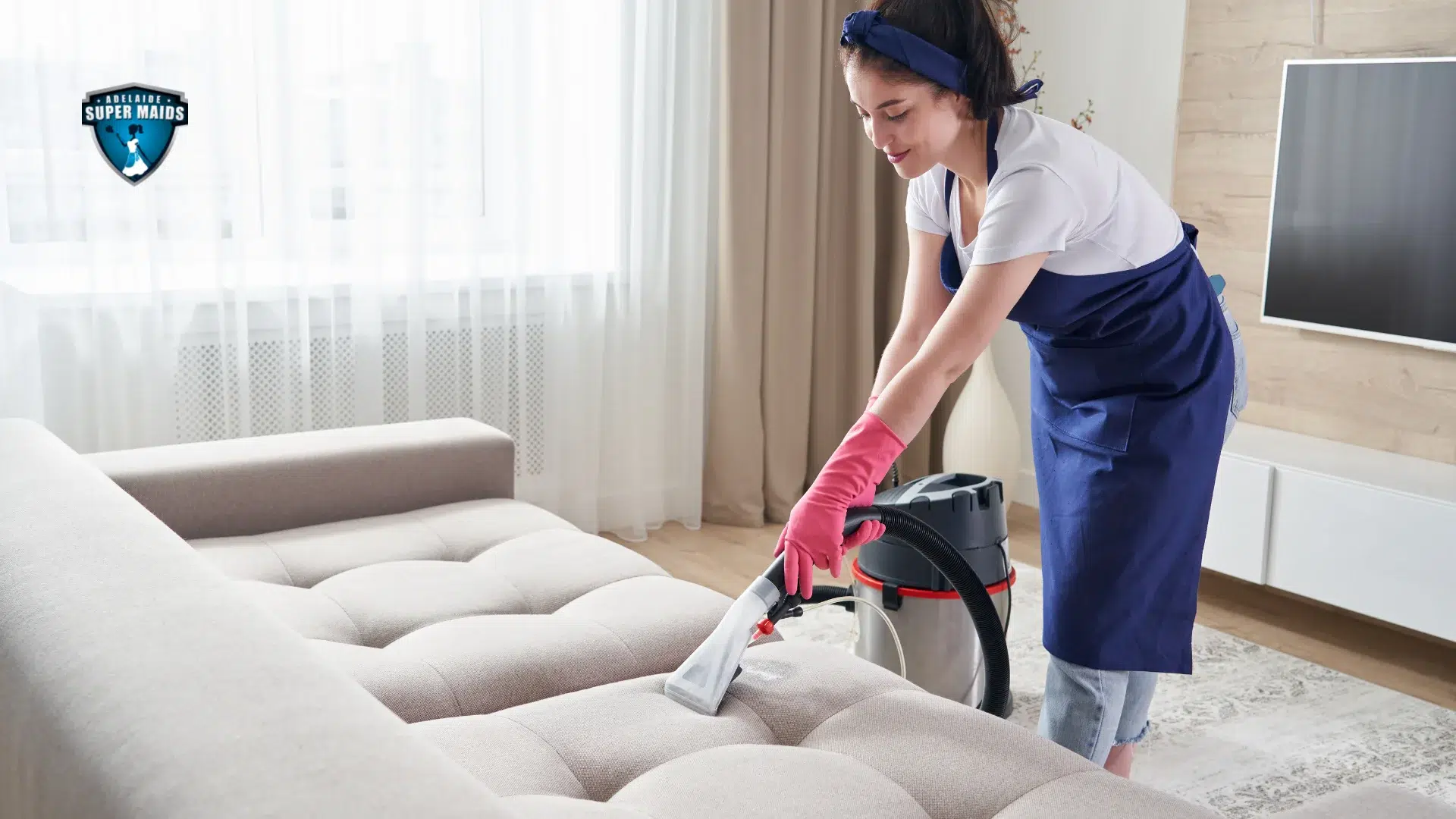
To clean a fabric couch, vacuum dry dust and crumbs with an upholstery attachment, blot fresh spills with a dry white cloth, and spot clean only with a method allowed by the care label. Test any approved cleaner on a hidden patch and let it dry before treating the visible mark. If the spill has reached the cushion filling or the fabric releases dye, stop adding liquid.
The right next step depends on where the problem is. A grey armrest, a coffee spill on a seat cushion and an odour coming from inside the foam each need a different approach. Here’s how to tell them apart and what you can do at home.
Quick Guide: What Part of the Couch Needs Cleaning?
| What you notice | What to do first | When to stop |
|---|---|---|
| Crumbs, dust or pet hair along seams | Vacuum with a clean upholstery attachment on low suction if the label allows it. | Stop if the attachment catches threads or disturbs the pile. |
| Grey or shiny arms and headrests | Vacuum first. Compare the dry area with a less-used part of the same fabric. | If the fabric looks worn or flattened, avoid repeatedly scrubbing the area. |
| A fresh spill on the seat | Lift solids and blot liquid with a dry white cloth. | If liquid reaches the underside of the cushion or the filling, don’t add more cleaner. |
| A ring left by a previous clean | Let the patch dry fully before judging the mark. | If the ring remains, don’t keep wetting its edge. |
Check the Label Before You Clean the Cushion or Cover
Look under the seat cushions, along the couch base or in the manufacturer’s care booklet. If there’s a separate label on a cushion cover, check that too. The outer cover, fixed arms and cushion filling may have different care instructions.
Where letter codes are used, W generally means a specified water-based upholstery cleaner, S means a specified water-free solvent, WS may permit either, and X means dry maintenance only, as directed. The written instructions take priority. If you can’t confirm the method, blot fresh liquid and contact the retailer with the model and fabric name before using a cleaner.
Don’t choose a cleaner from the fabric name alone. Microfibre can have different care codes, and a velvet cushion can look lighter or darker simply because the pile is lying in a different direction. For more detail on fabric types and care codes, read our guide to cleaning upholstery safely.
How to Clean Fabric Couch Cushions, Arms and Seams
1. Start with the dry areas
Take off throws and lift loose cushions if the design allows it. Use a clean upholstery attachment to vacuum the arms, back and seat. Use a crevice tool gently around piping and between cushions, keeping it away from loose threads. If there’s a fresh wet spill, blot it first and keep a standard dry vacuum away from the wet area.
2. Check whether a dark armrest is dirty or worn
After vacuuming, look at the armrest in daylight and compare it with a less-used area of the same fabric. Dust may lift with vacuuming, while body oil may need an approved cleaner. If the surface looks shiny, flattened or faded, wear may be part of what you’re seeing. More scrubbing won’t restore worn fibres.
3. Test the cleaner on the same fabric
If spot cleaning is allowed, use a small hidden area covered in the same fabric as the mark, such as the back edge of a loose cushion. Apply the approved product as directed, then let the test patch dry completely. Stop if colour comes off onto a white cloth, a ring forms, or the dried patch looks or feels different.
4. Treat the mark without soaking the cushion
Use the amount and application method specified on the product. For a fresh spill, press and lift with a clean white cloth, working from the edge towards the centre. Change to a clean section of cloth as it picks up liquid. Avoid saturating seams and piping, and don’t rinse unless both the product and the couch care instructions allow it.
What to Do About Coffee, Wine, Grease, Ink and Pet Accidents
| Stain or spill | First action | What to check next |
|---|---|---|
| Coffee, tea or red wine | Blot promptly with a dry white cloth. | If a mark remains, check which spot cleaner the label permits. Coffee with milk or sugar can leave residue even after the colour lightens. |
| Food, sauce or grease | Lift solids with a spoon and blot surface residue. | Check whether the approved product is suitable for oily marks. Don’t scrub or add water by default. |
| Ink or makeup | If the mark is fresh, lift any loose excess gently without wiping it across the fabric. | Avoid experimenting with rubbing alcohol or other household solvents. Get advice if the mark spreads or the fabric colour transfers. |
| Pet urine | Blot surface moisture with disposable absorbent towels. | Use an enzyme product only if it is suitable for the fabric and the manufacturer permits the method. If the underside is damp or the smell returns after drying, the filling may need assessment. |
| An old or unknown mark | Take a photo and note any products already used. | A pale patch may be colour loss rather than residue. Avoid layering cleaners to see what works. |
Can You Wash Removable Fabric Couch Covers?
Machine wash a couch cover only if its care instructions explicitly allow it. A zip can be there to fit the cover around the cushion during assembly. It doesn’t tell you whether the cover will tolerate washing, spinning or drying.
If the label allows machine washing, follow the specified cycle, temperature, detergent and drying method. Check whether the manufacturer recommends washing covers as a set to reduce uneven colour. Keep the cushion insert out of the wash unless it has separate instructions that permit it.
How to Dry a Fabric Couch and Deal With Lingering Odours
If the manufacturer allows air drying, move air around the treated area with ventilation or a fan. Keep loose cushions apart so air can reach the sides and underside. Avoid direct heat unless the manufacturer approves it, and wait until the treated area, seams and cushion edges are dry before putting cushions or throws back in place.
If the couch still smells after it has dried, check where the odour is strongest: on the fabric surface, around a seam or beneath the cushion. A smell that returns from underneath after a spill can indicate a problem in the filling. Fragrance may cover it briefly, but it won’t address what’s underneath.
For routine care, vacuum as often as the couch needs and the label allows. Rotate reversible cushions where permitted, and wash throws according to their own labels. These steps help manage loose dirt and everyday odours without repeatedly wetting the couch.
Can You Steam Clean a Fabric Couch or Use Household Products?
A handheld steamer applies vapour. An upholstery extractor applies and recovers liquid. Check whether the manufacturer permits the specific method before using either machine. A W code that allows water-based spot cleaning does not, by itself, approve steam, extraction or cleaning the whole couch.
Vinegar, bicarbonate of soda, dishwashing liquid and rubbing alcohol appear in many home-cleaning recipes. Use them only if the manufacturer approves the specific product and method for your fabric. For examples of how instructions differ between fixed covers, washable covers and pile fabrics, see the Warwick Fabrics care labels. The La-Z-Boy fabric care guide also explains why approval for spot cleaning doesn’t necessarily extend to machine cleaning.
When to Stop and Get the Couch Assessed
Stop if the fabric transfers dye, changes texture, develops a persistent ring or stays damp underneath. Get advice if a spill reached the filling, an odour returns after drying, or the entire couch looks uneven and needs more than an isolated spot clean. Before asking for help, take a photo of the whole couch, the mark and the care label. Include what spilled and what you’ve already applied.
If you need help deciding what treatment suits your couch, see our sofa cleaning in Adelaide service.
Frequently Asked Questions
Can I clean a fabric couch with just water?
Only if the manufacturer allows it. Some fabrics mark when wet, and approval for a specific water-based upholstery cleaner doesn’t automatically mean plain water is recommended. Test the approved method first.
Can I clean a couch without a steam cleaner?
Yes. For routine care, gentle vacuuming and prompt blotting are often enough. Treat individual marks by hand with a permitted cleaner after testing it on a hidden area.
How do I get rid of a water ring on a fabric couch?
Let the area dry fully first. If the ring remains, don’t rewet it repeatedly. Check the care instructions or ask for advice before treating a larger section, especially if you don’t know what caused the ring.
Why does my couch look darker after cleaning?
Damp fabric can look darker. Wait until it dries before comparing it with the rest of the couch. If the colour difference remains or the texture has changed, stop applying products and have the area assessed.
Can I clean just one couch cushion?
Yes, if the label permits the method and the issue is limited to that cushion. For washable covers, check whether the manufacturer recommends washing a full set to avoid an uneven appearance.