
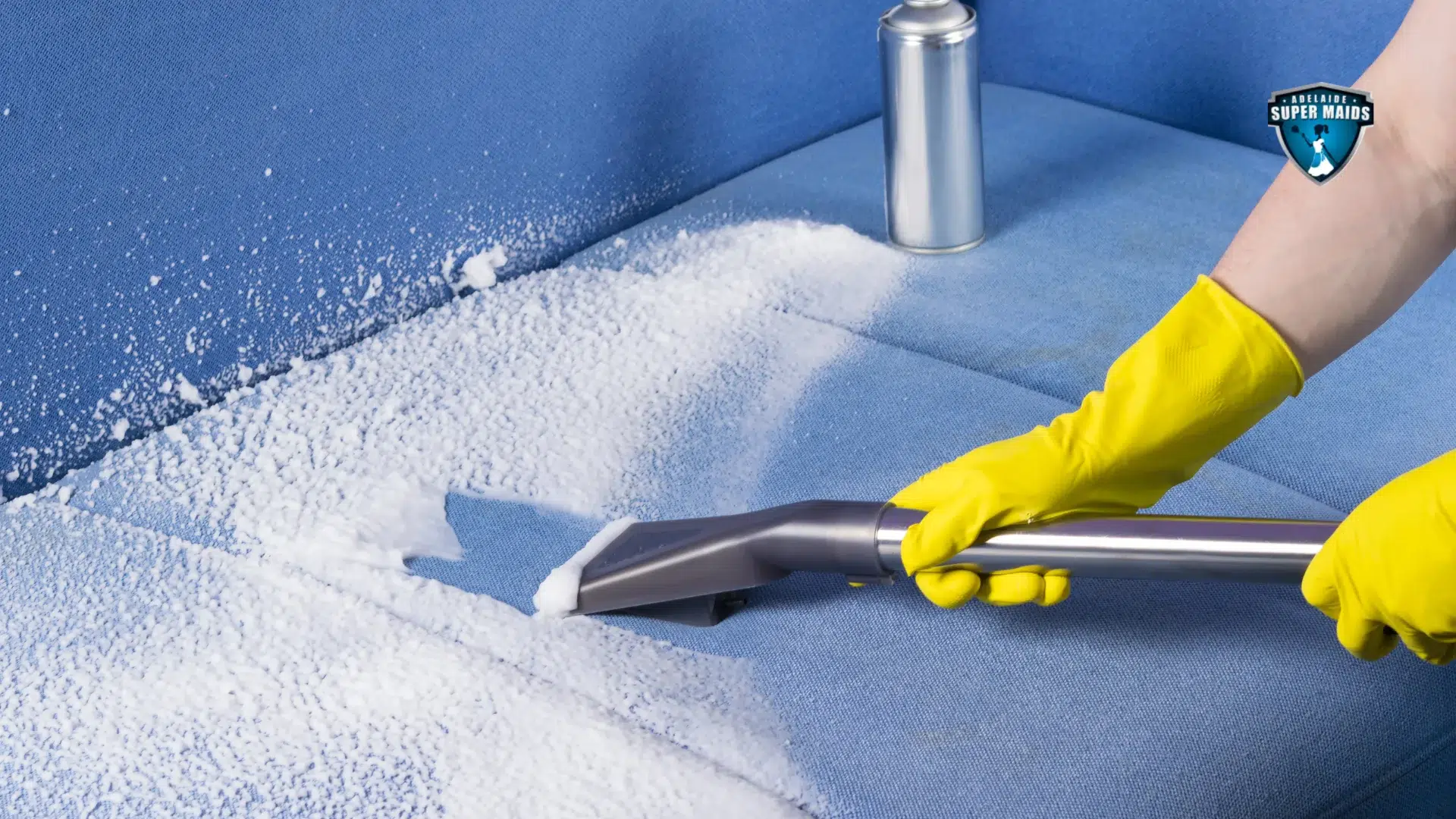
Upholstered sofas, dining chairs, armchairs and bedheads collect dust, crumbs, body oils, pet hair and occasional spills. Regular maintenance can help manage this everyday soil, but there is no universal cleaning method for every item. Fibre content, dyes, backing, fillings, finishes and previous treatments all affect how a piece should be cleaned.
This guide explains how to clean upholstery at home without assuming that water, steam or a homemade mixture is safe for every fabric. It also shows when to stop DIY treatment and request specialist help.
Check the Upholstery Care Label First
Look beneath the cushions or furniture frame for the manufacturer’s care label. Some upholstered furniture uses cleaning codes such as W, S, W/S or X, but the wording and permitted methods can vary. Follow the instructions supplied with the item rather than relying on the appearance of the fabric alone.
- W: Generally indicates that an approved water-based upholstery cleaner may be used.
- S: Generally indicates a suitable water-free solvent method. This is not a reason to apply any household solvent.
- W/S or S/W: May permit an approved water-based or solvent-based method after testing.
- X: Usually means vacuuming or light brushing only, with professional advice required for further treatment.
If the label is missing, unclear or conflicts with other manufacturer instructions, do not guess. Contact the retailer or manufacturer where possible. Removable cushion covers may have separate washing directions, and a removable cover is not automatically machine washable.
Identify the Fabric and Construction
Two sofas that look similar may react differently to moisture and cleaning products. The visible face fabric is only one part of the furniture; dyes, linings, adhesives, foam and decorative trims also matter.
Cotton and Linen Blends
Natural-fibre blends can absorb liquid quickly and may show water marks, shrinkage or colour movement. Use only a method allowed by the care instructions and avoid oversaturating the fabric.
Polyester and Other Synthetic Fabrics
Many synthetic fabrics tolerate routine maintenance well, but fibre content alone does not confirm which cleaner is safe. Finishes and dyes may still react, so a hidden-area test remains essential.
Microfibre
Microfibre upholstery varies in construction and cleaning code. Do not assume that water or rubbing alcohol is appropriate simply because a fabric is described as microfibre. Follow the specific label.
Wool, Silk, Velvet and Viscose
These materials can be sensitive to water, heat, pressure or changes in pile direction. DIY wet cleaning may cause rings, distortion, shrinkage or colour loss. Professional advice is sensible before spot treatment.
Leather and Coated Materials
Leather is not cleaned in the same way as woven upholstery. Use products and conditioners approved for the specific leather finish. Avoid general fabric cleaners, excessive water and unverified oils that may darken or damage the surface.
What You Need for Routine Upholstery Care
- A vacuum with a clean upholstery attachment
- A soft brush attachment where permitted
- Clean white absorbent cloths
- A manufacturer-approved upholstery cleaner, if required
- Good ventilation or a fan for controlled drying
- Disposable gloves when handling bodily fluids or unknown residue
White cloths make colour transfer easier to notice. Avoid coloured towels that could transfer dye, stiff brushes that may disturb the pile and large quantities of cleaning solution.
How to Clean Upholstery Step by Step
1. Remove Loose Items and Inspect the Furniture
Remove cushions if the design allows it and check seams, piping, buttons, zips, loose threads and damaged areas. Note existing colour variation, wear or water marks before cleaning. Photographing the condition can be helpful when treating a valuable or delicate item.
2. Vacuum Loose Dust and Debris
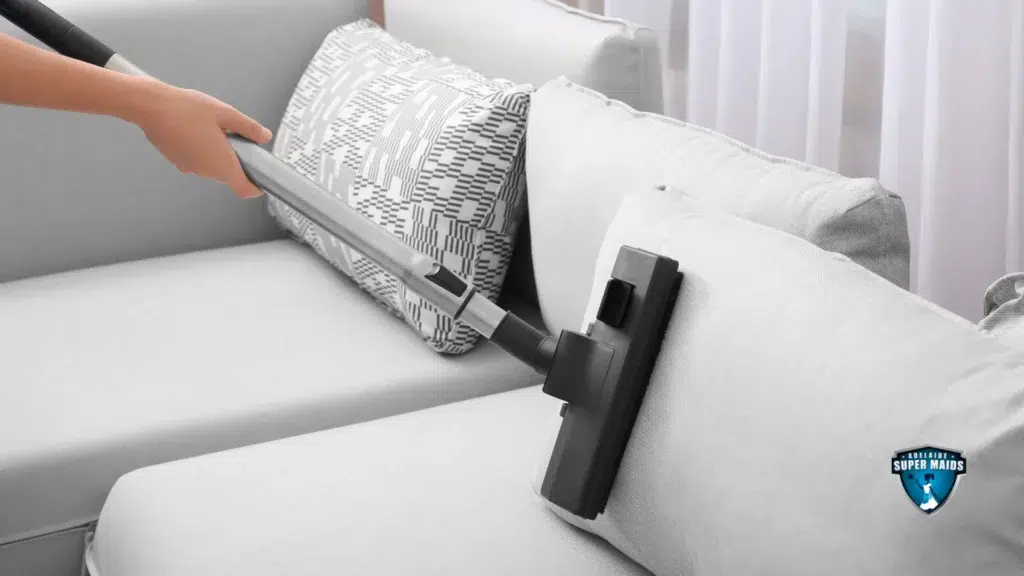
Use low or suitable suction with a clean upholstery attachment. Work across the surface, seams and crevices without pulling decorative threads. Vacuum both sides of removable cushions if the manufacturer permits it. Do not press the nozzle aggressively into delicate pile.
3. Test the Cleaning Method
Apply a small amount of the permitted product to an inconspicuous area. Follow the label, blot with a white cloth and let the test area dry completely. Stop if dye transfers, the texture changes, a ring develops or the fabric becomes lighter or darker.
4. Treat Spills by Blotting
For a fresh spill, lift any solids carefully and blot liquid with a dry white cloth. Work from the outside towards the centre to limit spreading. Do not rub, because rubbing can enlarge the mark and push residue further into the fabric or filling.
5. Apply Only the Approved Amount of Cleaner
If the care instructions allow spot cleaning, apply the product as directed rather than pouring it onto the furniture. Use controlled moisture and treat a logical section to reduce uneven rings. More product does not necessarily produce a better result.
6. Extract or Blot Residue as Directed
Blot with a clean cloth and replace the cloth as soil transfers. Rinse only when the care label and product directions require it. Repeated wetting can spread the stain into the filling and make drying more difficult.
7. Dry the Upholstery Completely
Improve airflow and keep the furniture out of use until the cover and internal padding are dry. Do not replace cushions while they are damp. Avoid direct heat unless the manufacturer approves it, as heat can affect fibres, finishes, dyes and adhesives.
How to Respond to Common Upholstery Stains
Food and Drink Spills
Lift solids without spreading them and blot liquids promptly. Check the care label before applying a product. Sugary or milky drinks can leave residue even when the visible mark appears lighter, so avoid masking the area with fragrance.
Oil and Grease
Do not add water automatically. Oil-based marks may need a different method from water-based spills, and an unsuitable treatment can spread the stain. Follow the manufacturer’s directions or request an assessment.
Ink, Paint and Cosmetics
These stains vary considerably by formulation. Alcohol, solvent and paint-removal products can affect dyes, coatings and foam. Avoid experimenting with several products, and provide the product name to a cleaner if professional help is required.
Pet Accidents and Bodily Fluids
Wear gloves, remove solid material carefully and blot moisture with disposable towels. Keep children and pets away while the area is treated. Stain cleaning and hygiene treatment are not automatically the same process, particularly when contamination has reached the filling. Use only products approved for the upholstery and the type of contamination.
Unknown or Old Stains
Do not assume the stain type based only on colour. Previous cleaning attempts may have changed its appearance or affected the fabric. Start with an inspection and avoid combining chemicals. Record everything already applied before seeking advice.
Should You Use a Homemade Upholstery Cleaner?
Dishwashing liquid, vinegar, baking soda and rubbing alcohol are often recommended online, but none is universally safe for upholstery. A household ingredient can leave residue, alter colour, affect a protective finish or react with a product used previously.
Use a homemade solution only when the furniture manufacturer permits its ingredients and method. Test it first, use minimal moisture and never mix cleaners. In particular, never combine bleach with ammonia, acids or other cleaning products.
Is Steam Cleaning Safe for Upholstery?
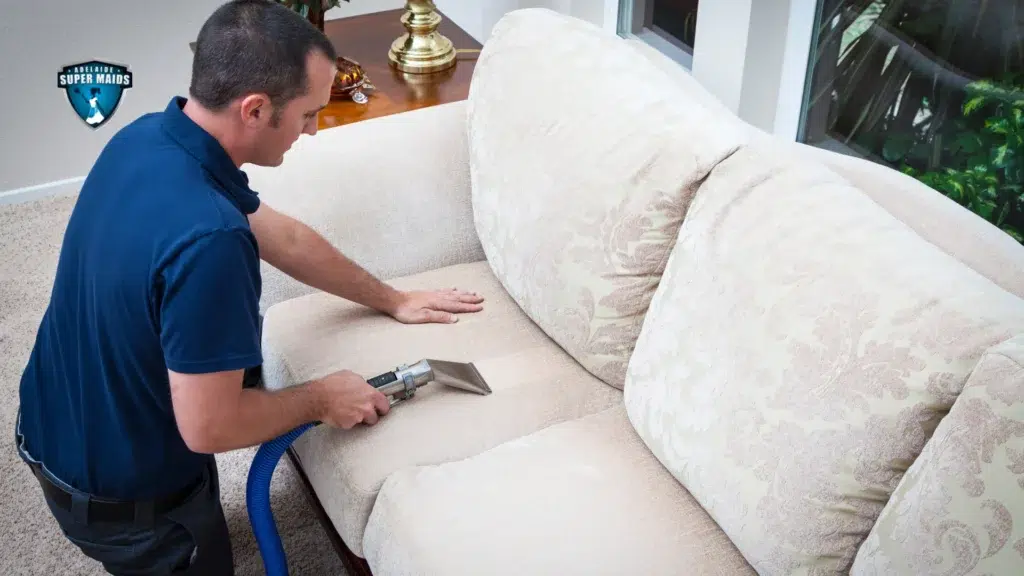
Steam or hot-water extraction may be suitable for some furniture, but not all upholstery tolerates heat or moisture. The equipment, temperature, pressure, cleaning chemistry and drying conditions must match the material and construction.
A consumer steam device should not be used simply because a fabric has a W code. Some items can develop water rings, dye migration, shrinkage, pile distortion or prolonged dampness. Check the manufacturer’s instructions and the equipment manual before proceeding.
How to Maintain Upholstery Between Cleans
- Vacuum gently at a frequency suited to household use.
- Rotate reversible cushions where the manufacturer permits it.
- Blot spills promptly instead of waiting for them to dry.
- Keep care labels and warranty information for future reference.
- Protect furniture from prolonged direct sunlight where practical.
- Use washable throws in high-use areas if appropriate.
- Avoid sitting on furniture with products or oils that may transfer.
- Do not apply fabric protector unless it is compatible with the material.
There is no fixed professional-cleaning interval suitable for every home. Usage, pets, children, spills, fabric type and indoor conditions all affect when an item needs attention. Cleaning too aggressively or too often can be as unhelpful as neglecting it.
When to Request Professional Upholstery Cleaning
Professional help may be appropriate when the care code is unclear, the item is delicate or valuable, stains cover a large area, odour returns after drying, the filling is contaminated or a previous DIY treatment has changed the fabric. It can also help when the furniture needs an overall clean rather than isolated spot treatment.
Adelaide SuperMaids provides upholstery cleaning in Adelaide for suitable furniture following an assessment of the fabric, construction, condition and requested scope. Share the care code, furniture dimensions, stain type and products already used when enquiring. Suitability and likely outcomes depend on inspection, and complete stain or odour removal cannot be guaranteed before treatment.
Stop DIY Cleaning and Seek Advice If:
- Colour transfers onto your test cloth
- The fabric develops a ring, stiffness or texture change
- The stain spreads or returns after drying
- The furniture remains damp for an extended period
- The item contains silk, viscose, velvet or unstable dyes
- The care label specifies professional cleaning or X-code care
- You are unsure which products were applied previously
Frequently Asked Questions
What is the safest first step when cleaning upholstery?
Read the care label, identify the fabric and vacuum loose debris. For a spill, blot with a clean white cloth. Test any permitted product in a hidden area and allow the test to dry before treating a visible section.
Can I use water on every fabric sofa?
No. Some fabrics, dyes, linings and fillings are moisture-sensitive. Use water only when the furniture care instructions permit a water-based method.
Can removable cushion covers go in the washing machine?
Only if their label specifically allows machine washing. Removing a cover does not mean it is washable, and shrinkage may prevent it from fitting the cushion again.
How often should upholstery be vacuumed?
The appropriate frequency depends on usage, pets, children and the fabric. Many frequently used items benefit from gentle routine vacuuming, but always use an attachment and suction level suitable for the upholstery.
Will professional cleaning remove every stain?
No result can be confirmed before assessment. Stain age, fibre type, dyes, contamination depth, wear and previous treatments can all affect the outcome. Some marks may be permanent or may not be safe to treat further.
Why does an upholstery stain return after drying?
Residue or moisture may have travelled into the backing or filling and moved back towards the surface as it dried. Repeatedly wetting the visible mark may make this worse, so consider an assessment.
Is upholstery cleaning the same as disinfecting?
No. Removing visible soil does not automatically disinfect the material. If bodily fluids or infectious illness are involved, use an appropriate method for the contamination and the surface, or seek specialist advice.
Final Thoughts
Safe upholstery cleaning begins with the care label, not a universal recipe. Routine vacuuming, quick blotting, hidden-area testing and controlled moisture can help manage everyday dirt and minor spills. Delicate fabrics, widespread soiling, persistent odours and uncertain stains require a more cautious approach.
If you need help assessing a sofa, chair or other upholstered item, contact Adelaide SuperMaids with photographs, measurements and details of previous cleaning attempts.