

Mould on carpet is not simply a dark stain. It indicates that moisture has remained long enough to support growth, and the visible patch may be only part of the affected area. The carpet pile, backing, underlay, subfloor, skirting boards or nearby wall can all be involved.
This guide explains how to respond safely, what not to do and why cleaning, remediation and replacement are different decisions. It does not promise that a mouldy carpet can be restored or made safe through a household remedy.
Why Does Mould Grow in Carpet?
Mould needs moisture. Spores are naturally present in indoor and outdoor environments, but growth becomes more likely when carpet or the materials beneath it stay damp. Common sources include:
- Plumbing, appliance or roof leaks
- Flooding or water entering beneath doors and walls
- Spills that reached the backing or underlay
- Condensation in poorly ventilated rooms
- High indoor humidity
- Wet carpet cleaning followed by slow drying
- Moisture rising through a slab or subfloor
- Damp items or furniture left on carpet
Cleaning the visible surface without fixing the moisture source is unlikely to provide a lasting solution. A leaking pipe, building defect or drainage issue may require a plumber, builder, roofer or other qualified trade before carpet decisions are made.
Signs of Mould or Moisture Damage in Carpet
- Visible green, black, brown or pale growth
- A persistent musty odour
- Carpet that feels damp, stiff or unusually cool
- Discolouration that returns after cleaning
- Water marks on nearby skirting boards or walls
- Rust, swelling, peeling paint or damaged flooring nearby
- A known leak, flood or prolonged period of high humidity
Colour alone cannot identify the mould species or the full extent of growth. Musty odour without visible mould may indicate hidden moisture beneath carpet or behind nearby materials. Do not lift a large affected area simply to investigate, because disturbing hidden growth can release more material into the air.
What to Do When You Find Mould on Carpet
1. Keep People and Pets Away
Limit access to the affected area, particularly for children and anyone with asthma, allergies, a weakened immune system or other health concerns. If someone is experiencing symptoms, seek advice from a qualified health professional rather than relying on a cleaning article for diagnosis.
2. Stop the Water Source
If it can be done safely, stop an active leak and arrange the appropriate repair. Do not enter an area with electrical hazards, contaminated floodwater, structural damage or unsafe flooring. Contact emergency, building or restoration services where required.
3. Document the Condition
Take photographs of the carpet, nearby surfaces and likely water source before moving items. Note when the moisture event occurred and whether the water came from a clean supply, rain, a drain, sewage or an unknown source. Tenants should report leaks and mould to the property manager or landlord promptly and retain the communication.
4. Avoid Disturbing the Growth
Do not dry brush, sand or aggressively scrub mouldy carpet. Do not use an ordinary vacuum on visible growth, as it may spread particles and contaminate the equipment. Avoid directing a fan across visible mould before the area has been assessed, because airflow can distribute material to other rooms.
5. Assess the Extent and Materials Involved
Consider the visible area, duration of dampness, odour and likelihood that moisture reached the underlay or subfloor. A small visible spot does not confirm that the problem is limited to the surface. If the source was sewage or other contaminated water, professional restoration is appropriate.
6. Decide Between Cleaning, Remediation and Replacement
Hard, non-porous surfaces may sometimes be cleaned and dried using an appropriate method. Carpet and underlay are absorbent materials with spaces that mould can penetrate. Once genuinely mouldy, they may need removal and replacement rather than routine carpet cleaning.
Can You Clean a Small Mould Spot Yourself?
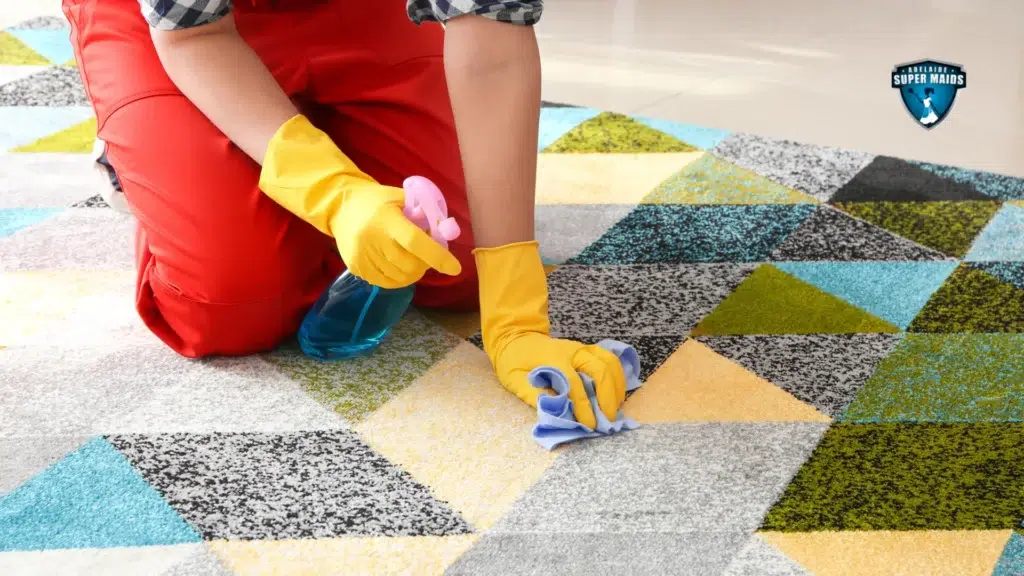
The answer depends on more than the visible size. You also need to know how long the carpet was wet, whether the underlay is affected, the source of the water, the health of occupants and whether growth is recurring.
Before attempting any limited cleanup, follow current local public-health guidance and the carpet manufacturer’s instructions. Use appropriate personal protective equipment, prevent the material from spreading and never mix chemicals. If you cannot confirm that the problem is superficial, limited and caused by clean water, stop and seek experienced advice.
A cosmetic improvement is not proof that mould has been removed from the backing or underlay. Similarly, killing visible growth does not remove the remaining material, allergens or moisture problem.
Why Vacuuming Visible Mould Can Be a Problem
Vacuuming visible growth with a standard household machine can disturb the area and contaminate the vacuum. A HEPA label alone does not make an ordinary consumer vacuum or the cleanup process suitable for mould remediation.
Specialist remediation procedures may include controlled removal, containment and purpose-appropriate equipment. These methods should not be reduced to “vacuum the mould” without considering the extent of contamination and how waste and equipment will be handled.
Does Vinegar Kill Mould in Carpet?
Vinegar is frequently suggested online, but it is not a reliable universal solution for mouldy carpet. Even if a product affects growth on the surface, it may not reach mould in the backing, underlay or subfloor. Vinegar can also affect dyes, fibres, adhesives and nearby materials.
Do not combine vinegar with bleach or another cleaner. Chemical mixtures can create dangerous reactions or fumes. Product selection should follow official guidance, material compatibility and the actual remediation plan rather than a generic recipe.
Does Baking Soda Remove Mould From Carpet?
Baking soda may absorb some odour or moisture at the surface, but it does not resolve a leak or prove that mould has been removed from a porous carpet system. Applying powder and then vacuuming it from active growth can also disturb contaminated material.
A reduced smell after treatment is not evidence that the area is clean or dry beneath the pile. Investigate the moisture source and extent instead of masking the odour.
Should You Steam Clean Mouldy Carpet?
Steam or hot-water extraction is not automatically appropriate for active mould. It introduces moisture, and ordinary carpet cleaning does not replace containment, removal of affected porous materials or remediation of the water source.
Once the moisture problem and active mould have been properly addressed, unaffected or retained carpet may be considered separately. Adelaide SuperMaids can assess whether professional carpet steam cleaning is suitable for the requested carpet-cleaning scope. This service should not be represented as mould remediation, and suitability or complete removal cannot be guaranteed without assessment.
When Mouldy Carpet May Need to Be Removed
Removal may be the safer or more practical option when:
- Growth is visible across a substantial area
- The carpet or underlay remained wet for an extended period
- Mould has reached the backing, underlay or subfloor
- The musty odour returns after the area dries
- The water came from sewage or another contaminated source
- Moisture damage affects walls, skirting boards or other building materials
- The affected area is connected to a contaminated HVAC system
- Occupants have health concerns that require professional advice
Removal should be planned to limit the spread of contamination. Do not cut, pull up or carry mouldy carpet through the home without appropriate controls. A remediation professional can assess containment, disposal, drying and treatment of the remaining structure.
What If the Mould Came From Floodwater or Sewage?
Water categories matter. Sewage, drain backups and some floodwater may contain biological or chemical contaminants beyond mould. Household stain-cleaning steps are not suitable for this situation.
Avoid contact, isolate the area and contact an experienced water-damage or remediation professional. Electrical, structural and insurance considerations may also apply. Tell the provider where the water came from and how long materials have been wet.
How to Prevent Mould Returning to Carpet
Repair Leaks Promptly
Fix plumbing, roof, appliance and drainage problems rather than repeatedly drying the carpet surface. Check the underlay and nearby building materials after a significant leak.
Dry Wet Materials Quickly
Respond immediately to spills and water intrusion. Extract water using an appropriate method and assess whether the carpet, underlay and subfloor are actually dry. A dry-feeling surface may conceal moisture below.
Manage Indoor Humidity
Use ventilation, exhaust fans, air conditioning or a dehumidifier where appropriate. Investigate recurring condensation rather than treating it only as a cleaning issue.
Improve Airflow Carefully
Normal ventilation can help prevent damp conditions, but do not aim a fan across visible mould before assessment. In an active contamination area, uncontrolled airflow may spread particles.
Avoid Carpet in Persistently Wet Areas
Bathrooms, areas with repeated leaks and other moisture-prone spaces may not be suitable for absorbent floor coverings. Consider a flooring system appropriate for the conditions.
Inspect After Water Damage
Revisit the area after drying and repair. Check for returning odour, discolouration, dampness or new growth. Persistent signs indicate that the water source or affected material has not been fully addressed.
Health Considerations
Mould exposure can cause allergic or irritant reactions in some people, and individuals with asthma or other medical conditions may be more sensitive. Symptoms have many possible causes, so do not diagnose illness from the presence or colour of mould.
If you are concerned about symptoms or whether it is safe to remain in or clean the area, contact a healthcare professional or relevant public-health authority. Cleaning providers should not make medical claims or promise that a service will eliminate health risks.
When to Call a Mould Remediation Professional
Seek appropriately experienced help when the growth is widespread, hidden, recurring or associated with major water damage, contaminated water or HVAC involvement. Professional input is also appropriate when removal could disturb a large amount of growth or when vulnerable occupants may be exposed.
Questions to Ask a Provider
- Do you assess both the carpet and materials underneath it?
- How will you identify and control the moisture source?
- How will the affected area be contained?
- Which materials are likely to be removed rather than cleaned?
- How will moisture levels and drying be checked?
- How will contaminated waste and equipment be handled?
- What work is excluded from the quoted scope?
Frequently Asked Questions
Can mould be completely removed from carpet?
Not always. Carpet and underlay are porous, and mould can grow within spaces that are difficult or impossible to clean fully. Depending on the extent and moisture history, removal and replacement may be necessary.
Should I vacuum mouldy carpet?
Do not use an ordinary household vacuum on visible mould. Vacuuming can disturb particles and contaminate the equipment. Mould remediation may require specialised controls and purpose-appropriate equipment.
Can vinegar and baking soda remove carpet mould?
They are not reliable universal remedies for mould inside a porous carpet system. They may affect the carpet and do not fix the moisture source or confirm that growth beneath the surface has been removed.
Will steam cleaning kill mould in carpet?
Steam cleaning is not a substitute for mould remediation and may add moisture. Active growth, affected underlay and the moisture source should be assessed before ordinary carpet cleaning is considered.
Is black mould more dangerous than other colours?
Colour alone does not reliably identify the mould or determine the health risk. Treat any indoor mould and ongoing dampness seriously, and obtain professional health or remediation advice where appropriate.
How quickly should wet carpet be dried?
Act immediately. Official guidance commonly recommends drying water-damaged materials within 24 to 48 hours where possible to help prevent mould growth. Significant saturation still requires assessment of the underlay and subfloor.
Can I stay in a room with mouldy carpet?
That depends on the extent, exposure and occupants. Limit access, especially for vulnerable individuals, and seek health or remediation advice if you are unsure.
Who should I contact first about mouldy carpet?
Start with the source of moisture. This may require a plumber, builder, property manager or water-damage specialist. For established or extensive mould, contact an experienced remediation professional. A healthcare professional should address medical concerns.
Final Thoughts
The safest response to mould in carpet is to control moisture, avoid spreading the growth and determine how deeply the porous materials are affected. Surface colour or odour reduction does not prove that the backing, underlay and subfloor are free from mould.
Do not rely on universal vinegar, baking-soda, vacuuming or steam-cleaning instructions. For ordinary carpet cleaning after the mould and moisture issues have been appropriately resolved, contact Adelaide SuperMaids with details of the carpet condition and work already completed.